
 Written by
From yoga teachers to hair stylists to tattoo artists, many personal service practitioners share a common dream — to one day offer their services through their own commercial space.
These types of entrepreneurs often work out of their own homes or in businesses owned by others. Running this kind of business comes with certain freedoms: it can allow you to have meaningful input on the direction of your business and have control over your own hours. But it can be challenging as well, with no separation between home and work life or having to pay a commission to use someone else’s space.
For service practitioners like this, the co-operative model is a unique solution that allows them to share the costs, responsibilities, risks, and network needed to use their individual skills, while running a business together.
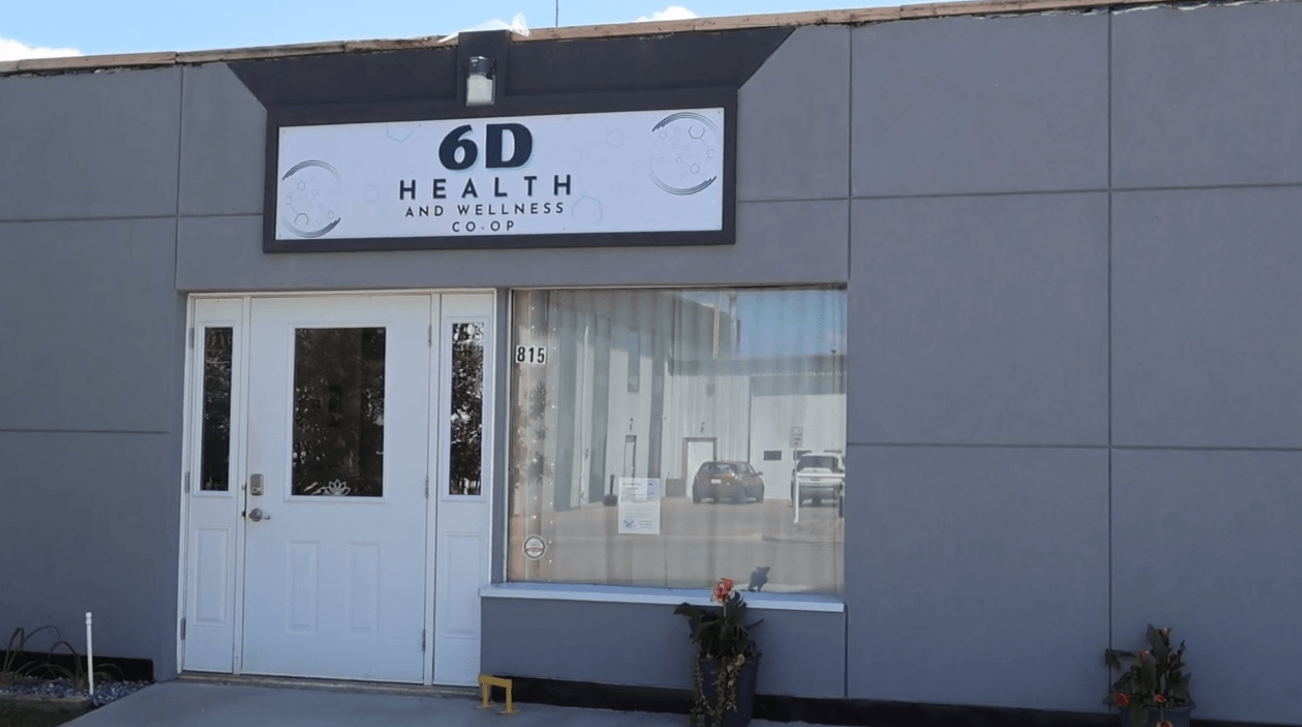
Stardust Studio Cooperative, a hair salon in Saskatoon, SK, and 6D Health and Wellness Cooperative, a holistic health centre in Brooks, AB, each leveraged the co-operative model to turn their entrepreneurial dreams into reality.
Stardust Studio Employment Co-operative
The five hairstylists who own Stardust Studio met while working together at another salon. The idea for their co-operative was born when they wanted to grow and have more ownership over the place they worked.
“We were having issues in our place of work and … we weren’t at a space where we could really grow or stay there for much longer,” said Jillian, one of Stardust’s co-founders. “We wanted to make sure that everybody had a plan for what they wanted … we worked together for so long, and we really loved and cared about each other and loved working together.”
Running a business doesn’t always mean flying solo. For this group of stylists, the logical solution was a worker co-op model. Sharing in a worker-owned business allows them to create their own jobs and share equally in the decision-making, risk, and costs of running a business.
“Because there were so many of us, it really just like made sense to go down a co-operative way, because it just ensures that everybody is equal: equal value, equal say, equal everything,” Jillian said.
In addition to a desire to continue working with her friends, Jillian felt that running a business without a support system would expose the gaps in her skillset. In a co-operative model, members can focus on what they do best.
“I originally didn’t really want to own something myself, because I know I have strengths and I know I have weaknesses,” she said. “When you own something 100 per cent on your own, then your strengths really help you, but then your weaknesses also really show through. Interior decorating is not my forte, so the thought of having to design the space and do all this stuff, I was like, ‘I don’t want to do that.’ That’s really overwhelming for me. But I naturally fell into the role of treasurer because my mom’s a bookkeeper.”

6D Health and Wellness Multi-stakeholder Co-operative
Unlike the stylists at Stardust Studio, the practitioners at 6D — who offer a range of services, from yoga, to reiki, to massage therapy — were each running businesses of their homes when they decided to come together and form a multi-stakeholder co-operative.
For them, their decision was born out of a desire to transition from their seperate spaces and create a wellness hub for their community, something that required a bigger, better space for their clients. Sharing a space also meant that each of these practitioners would find themselves surrounded by a likeminded network every day.
“It’s great having a home-based business, but you’re by yourself and there isn’t that disconnect from work and home,” said Robbi-Lynn, one of 6D’s co-founders. “For us coming together, one of the things that we noticed right at the beginning, was that camaraderie. There’s somebody else here to talk to in between our patients or classes that we’re doing, and so that just makes you feel better in general.”
6D is not one single business. The co-operative is a way for practitioners who own their own business to pool their resources. This gives them greater purchasing and marketing power, a space to operate out of, and allows them to also share their skills.
Although each of 6D’s founders have their own business, the co-operative model has fostered a collaborative environment. Rather than competing, they share their networks and refer clients to each other.
“It’s not, ‘I’m keeping my patients for myself, you guys go find your own.’ It’s very much a give and take with within all of the classes and the practitioners here,” said Robbi-Lynn.
Co-founder Shauna agrees. “Having the ability to operate as individual businesses under the co-op umbrella is a phenomenal thing … It’s very inspiring, and it’s also empowering. It keeps us motivated. This person had a massage, and now they’re coming for their booking for Reiki. [Then], they’re interested in, ‘Well, what does a yoga class look like?’”
The bottom line
The co-operative model offers a flexible pathway to realizing your vision of business ownership. For service-based practitioners, it’s a unique opportunity to foster the workplace you’ve always wanted to be part of, without taking on the full burden of business ownership alone.
Want to start a co-op? Reach out to Co-operatives First at info@cooperativesfirst.com.


